BattleCap-CO2
Climate change is one of the greatest challenges of our time. Rising atmospheric CO₂ levels from fossil fuel use and industrial activities are driving global warming, extreme weather events, and ecosystem disruption. Achieving climate neutrality requires not only reducing emissions, but also developing innovative technologies that can capture and transform carbon into valuable resources.
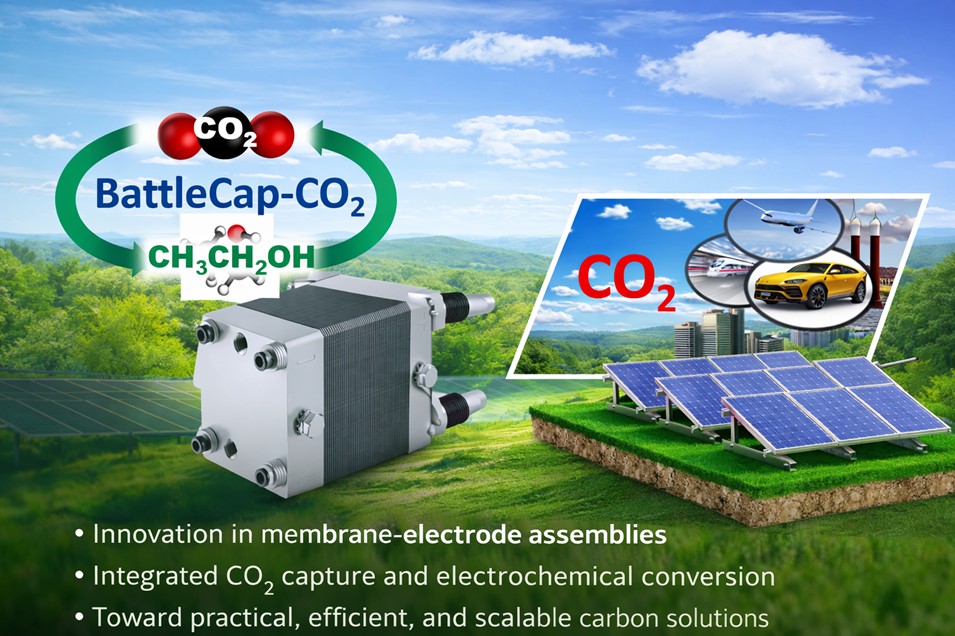
BattleCap-CO2 is a Marie Skłodowska-Curie Global Fellowship project dedicated to transforming how we capture and convert carbon dioxide (CO2).
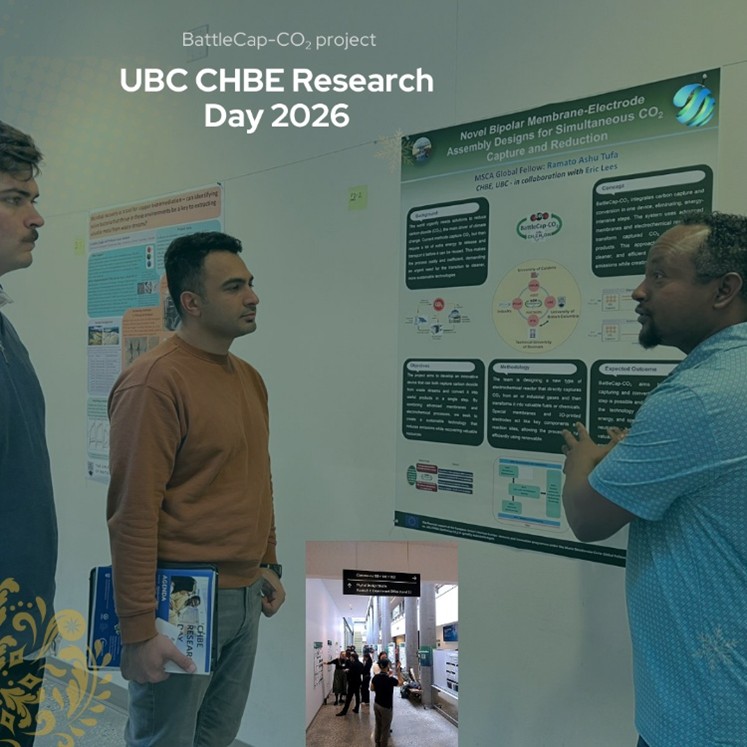
The project introduces a fully integrated electrochemical system that simultaneously captures CO₂ from air or flue gas and converts it into valuable chemicals within a single reactor. By combining advanced bipolar membrane technology with bio-inspired 3D electrode design, BattleCap-CO₂ aims to reduce energy consumption, simplify process design, and accelerate the transition toward climate-neutral technologies.
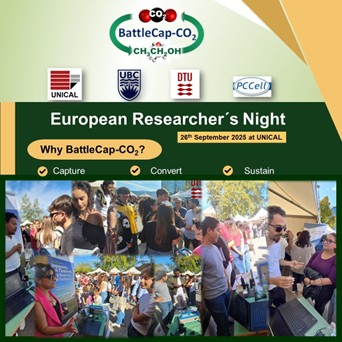
Hosted by the University of Calabria (Italy) and University of British Columbia (Canada), the project bridges materials science, electrochemistry, and engineering to develop next-generation carbon capture and utilization (CCU) systems aligned with the European Green Deal.
- Innovation in membranes.
- Advanced electrochemical reactor design.
- Toward practical and scalable CO₂ conversion.
About the project
Our Parners

University of Calabria (UNICAL)
University of British Columbia
Technical University of Denmark

PCCell GmbH
Innovating Carbon Capture for a Sustainable Future
Innovative Integration for Carbon Reduction
BattleCap-CO2 aims to transform carbon catpure and utilization (CCU) by combining CO2 capture and electrochemical conversion into a single, efficient system. This integration addresses the energy and cost limitations of traditional methods
Cutting-Edge Technology for Sustainability
By developing advanced bipolar membrane-3D electrode assemblies, the project seeks scalable, sustainable solutions that can reduce greanhouse gas emissions, paving the way for more efficient carbon management
Supporting the European Green Deal
Aligned with the European Green Deal, BattleCap-CO2 envision a carbon-neutral future, converting CO2 into valuable products like ethanol while minimizing environmental impact, bridging science and industry in the fight against climate change